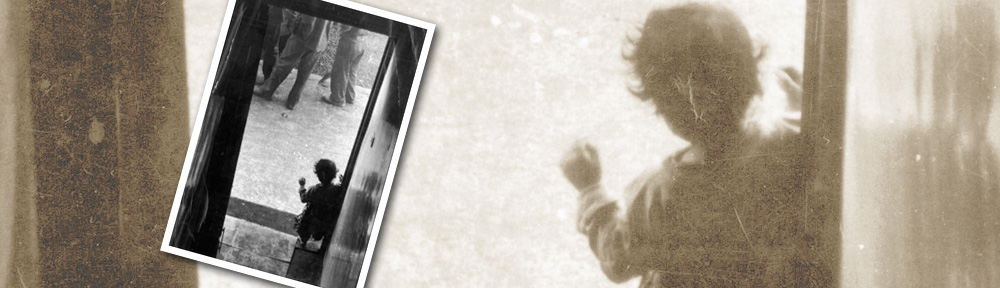
Parents and children
who slept through
the afternoon heat
call to one another.
Clotheslines squeak.
Wind lightly fingers
thin clay chimes.
-Laurie Fraser
Parents and children
who slept through
the afternoon heat
call to one another.
Clotheslines squeak.
Wind lightly fingers
thin clay chimes.
-Laurie Fraser
A shorter version of this article was published in Tone Magazine, July/August 2015:
We carry energy from our past lives. Sometimes it affects our circumstances in this life.
When I was younger, I refused to wear turtlenecks or necklaces; I was born with a birthmark on my neck; I freaked when a friend jokingly put her hands around my throat. Recently I learned about a past life where I was choked to death. I was a male who was attacked from behind in the dark. (Boston, 1818)
I am able to communicate with energy by using muscle testing & clairvoyance. When performing a healing, I sometimes clear old energy from past lives that is stored or stuck in organs or chakras. When I remove it, the body has one less thing to carry. Also it decreases the likelihood of repeating the same patterns. (Old energy can attract more of the same.)
I worked on a preschooler who sometimes wouldn’t eat, often expressing worry about whether it was “the last one”. He saved his Hallowe’en candy. He wouldn’t finish a box of cereal, insisting it be saved, even when his parents assured him there was more at the store.
His energy led me to a lifetime he had spent on the western coast of South America. He was the mother of many children living in abject poverty. The husband had died and she had few recourses. I cleared “fear of lack” from his root chakra. He is still a careful boy, but he left the obsession behind.
A toddler who woke with night terrors, shouting “Leave me alone!” when his parents tried to comfort him, had been killed in his last life. He was a woman who’d been raped and murdered in her bed. I cleared that, and the night terrors stopped immediately.
More commonly I work on adults:
A women’s anger led to 4 lifetimes ago in Kazakhstan: A woman born in 1642, died from a bladder infection at age 45. She’d been “pissed off” about her irresponsible husband.
A cat’s aggressiveness led to 5 lifetimes ago: She was a cat then too, tortured by her owner.
A man’s impotence led to 2 lifetimes ago in China: Helplessness and grief about his son’s death.
A woman’s infection led to her last life in the States: She died from infection 10 days after giving birth. The child who she didn’t live to raise became her sister today. The old energy was removed from her spleen.
A woman’s grief about her divorce led to 7 lifetimes ago: Her ex-husband in her current life was her brother then. They lived where the north of Iran is now. She adored her older brother who left on a spiritual journey with a holy man; she suffered terribly when he left. Although he assured her that he would return, he never did. She never got over it. The block was in her heart chakra. Removing the old heartbreak made it easier to cope with today’s loss.
A child, afraid of her Epi-pen: 3 lifetimes ago she was an indigenous man who was shot.
Me, reticent to take a leap of faith: in the 1500s, I was a male spiritual leader in South India who felt deserted by God when a devastating flood killed hundreds of his followers.
For me, the most mind-blowing part of this work has been understanding that sometimes we are at the mercy of our energy. Even centuries-old energy! Until it is removed, that is.
write to thewordnotspoken@gmail.com for an appointment. More info here.

Australian Sarah MacDonald records her two-year adventure in India in the oddest ways. At times, especially at the end of the book, she is personal and shares her reasons for wanting spirituality in her life, but it’s a long wait for that. It seems more of a lark for most of the book- she visits religious festivals, temples, schools and synagogues in the most superficial way possible. Is it possible to sincerely examine 10 religions in two years? MacDonald demonstrates- it is not.
I was offended by someone spending a week in Srinagar, talking to a few Muslims and then announcing “Islam taught me about submission.” Is she joking? Islam is far far more than that and she personally submitted to nothing in Kashmir unless one wants to count houseboat rides. So that’s the kind of thing that got under my skin- a quick look at a religion, a glib summary and on to the next. MacDonald just doesn’t seem sincere in her quest- perhaps it’s the tone that verges on arrogant:
“I’ve always thought it hilarious that Indian people chose the most boring, domesticated, compliant and stupid animal on earth to adore.” (She means Hindus, not Indians, and she is refering to the cow.)
MacDonald doesn’t get into the depths of any of these “religious” experiences. She announces she is an atheist and then seems to poke fun at some practices, yet she sporadically participates: dunks herself in the Ganges and gets sick; spends ten days in silence.; has an interesting conversation with a rabbi.
That aside, I love India and it was wonderful to armchair travel to places both previously visited and not. The descriptions of Pondicherry, Dharamsala, Vipassana, and Allahabad’s festival, Sai Baba’s ashram, and Amritsar’s Golden Temple, are full of fascinating detail. I was especially interested in the descriptions of the Parsi and Jewish communities.
The descriptions of living with Indian servant in New Delhi were fun: the iron that was stolen, the need to accommodate two cultures in one house, the dance lessons.
The writing at times tries too hard and distracts one from the story: “Perhaps Christianity has got something to give the world apart from Easter eggs, the Osmonds and guilt. For the first time, I see the faith, divinity and goodness in the faith of my forefathers.” That sentence structure (a comma’ed list of descriptors) is her favourite, sometimes used 4 or 5 times in a row!
I think MacDonald failed to consider beforehand just how personal she would get in this account and so that aspect is annoyingly uneven. She worries about her boyfriend sometimes (he is a reporter covering regional tragedies including a trip to Afghanistan just days after 9/11), but because she covers their wedding in a paragraph and never shares much about this relationship, the reader doesn’t care about this faceless character.
I often put the book down. In the time it took me to read it, I read two others which I heartily recommend: The Caliph’s House by Tahir Shah and The Bookseller of Kabul by Asne Seierstad. MacDonald could learn something from these humble thoughtful authors.
Look, if you’re going to write something personal, you have to get personal- doing it self-consciously half-way is not satisfying to readers. Bare your soul or write a documentary.
Kiss my watermelon breath.
Feel summer
on the backs of my knees.
Touch me.
I will turn gold.
Out today at my neighbourhood diner for breakfast and my weekly exposure to a television. Reading the CBC news-feed, I learned that 2 Canadian tourists have been detained for causing an earthquake in Malaysia that killed 13 people. The CBC offered this reason: superstition. In Malaysia, it is believed that the tourists (clearly too dumb to be travellers, well, unless they’re drunken 20-year-old travellers) “disrespected the mountain by removing their clothes and taking photos”.
I smile ruefully and dig into fruit salad reflecting on the workplace discussions to take place tomorrow: judging Malaysians to be backward superstitious people, and the tourists to be unfairly detained.
In fact, the tourists flagrantly broke the laws of this Islamic country. The Canadian government warns us when we pick up our passports- you are subject to the laws of the country you travel to.
If you go to an Islamic country, be well-versed in Islamic law. It is unlawful to strip nude in a public place, and depending on the country, it may be unlawful to wear shorts or short sleeves. These tourists disrespected the country, the law and the culture. I wonder if they did some research before they went- as recently as a month ago, Malaysia’s movement toward harsher Islamic laws (stonings, amputations) was news-worthy.
The charge against the Canadians (and friends) is not disrespecting the mountain. They have been “barred from leaving the country on the offence of gross indecency”. (CTV News)
Sure, it’s hard for a Canadian to think and behave as if they have no rights- we almost can’t think without our rights. I had this problem in Turkey. The following excerpt from The Word Not Spoken illustrates:
(Leigh has just returned to Goreme, Turkey to see Ahmet, her new love.)
Ahmet and Leigh lugged her bags up the great hill that was Goreme. Then they climbed many icy stone steps to a patio. They dropped the bags at the door of Kaya Pension and sagged against it, catching their breath. Ahmet chipped away at the ice on the door with his keys, trying to open it.
“Why are we here?”
“We will stay here until my pension is open,” he said. “I am working every day to open it.”
“Your pension is closed?” This was news to Leigh.
“The gendarme locked the door. Even my clothes are locked in there.”
“But why?”
“The mayor of this village will not give me a license because I am Kurdish. He doesn’t want Kurdish business in his village. But I will not go.” He stabbed at the ice and chips flew all over them.
“But that’s no reason to not give you a license.” She crossed her arms.
“I tried to buy one, but he will not give it to me.”
“But what is his reason? He must give a reason, like there aren’t enough windows or enough toilets, or some rule like that?”
“What are you talking about? Did you listen? He told me the reason. It is because we are Kurdish.” He yanked on the door but it didn’t open.
“But that’s discrimination!”
Ahmet gave up on the door for the moment and turned to her. “Come here, Leigh.” He held her cold dry hands in his cold wet hands. “You are in Turkey now. We are not protected by any laws. The government is prejudiced. The court is prejudiced. The mayor can do whatever he wants.”
“Oh.” Leigh felt ridiculous. Her human rights were so basic; it was hard to think without them.
“A German journalist was here, and I told her my story. She took a picture of the pension and the sign I put on the door. It said, ‘This Kurdish business closed by Turkish government without reason.’ She put it in a German newspaper.”
Book clubs are enormously popular in Canada- many can be found online, but most seem to be “just the neighbours” or “we used to work together.” They range from 6 friends drinking wine and talking very little about the suggested book (partly because not everyone read it) to committed readers interested in deep discussion. Most clubs allow members to take turns recommending books, and from what I see, the majority of book clubs are women-only.
One club that I visited read The Importance of Being Earnest the month after reading The Word Not Spoken. They read the play aloud- each member chose a character, and they read with much merriment. In fact, they dressed in period costume, and the meeting lasted well into the night.
Random House of Canada has an annual contest for book clubs. In 2013, “Book Friends ’72” in Ottawa won after 40 years of regular meetings re: 360 books!
I was only a child when I studied the “Book Club Selections” pages of magazines. Do you remember the stamps that could be torn out and pasted on the order card? I imagined a stamp about my book, and all the people who would pick that stamp.
Writers talk about the “the book club circuit”. Finding the clubs are the first challenge and then getting them to read your book is the next. From there, word of mouth travels. It is really grass roots for a book to become known through book clubs. Fifty Shades of Grey owes its success entirely to book clubs- let’s face it, it is poorly written, the last 2 books embarrassingly so, but as a book club selection, it was perfect fodder for interesting conversation. (Of course, there was nothing grass roots about Oprah’s Book Club- being recommended by her equaled overnight success.)
I’ve been to five book clubs now as a guest author. It’s an all-around win to attend such an evening: the immediacy of the discussion, the personal details, the readers’ feedback.
Mainly, book clubs want to know:
-How much is true?
-What happened to Jess in real life?
-How long did it take to write; the writing process/publishing process.
-Am I currently in touch with the family: How are they now? Did Shana marry Memo?
-How do Kurdish and Turkish readers respond to the book?
Mainly, I want to know:
-Did you notice the themes: the animals and water and colours?
-Was the number of deaths too hard on you? How did you feel about the ending?
-How sympathetic did you feel toward Ahmet? The Kurdish situation at the time?
-Did you notice the clues that Ahmet has taken over the story?
-Did you see the “beadwork” in the first and last scenes? The repeated images and words in different contexts?
Some book clubs are into wine and salty hors d’oeuvres; some serve tea in china and homemade cherry tarts. In my experience, they’ve been pleasant groups of women aged 30+ who are travelled, educated and vitally interested in the world around them. I always leave feeling incredibly validated- the “word” is spreading; my promise has been kept.
To release the book, to stop writing and polishing it, was very sad for me. After all, it had been in my pocket for 18 years, and I had spent many holidays, weekends and nights with this friend. It was the place I most loved to go. When I gave up the writing, I feared I’d lost this place, this escape. It has been a relief to learn that I haven’t lost it. In fact, I have only shared it. When I go to that place now, I find others there who love it too and who want to talk about it. To spend an evening talking to people who know who Abla is, who can talk about Ahmet’s mental state and Leigh’s choices, is enormously comforting to me.
In appreciation, I give free e-books to book club members. I bring photos, more personal than the pics on this website. I talk about the healing and personal aspects of my writing journey. But mostly, for me, it is the joy of sharing this story that makes visiting a book club an absolute high.
Easter Sunday.
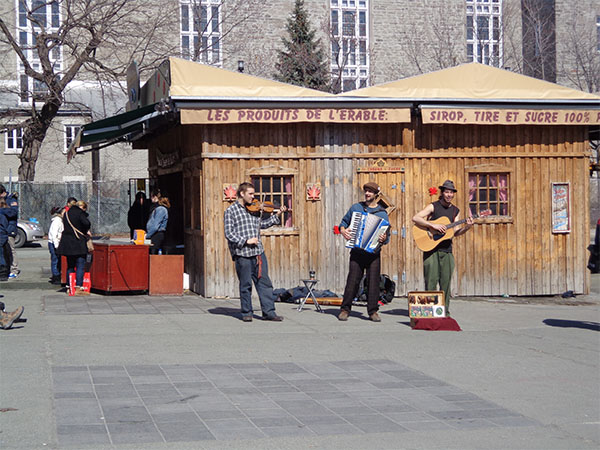
Mont Royal metro station
Spring sun opens my eyes-
white curtains, lime walls
church bells chime.
Spring sun hits sidewalk.
Many feet hit rue Mont Royal-
some of them furry.
Some stop at the Metro-
$2.00 maple taffy
from a tray of sweet snow.
Spring sun sings with me,
a fiddle, a guitar and an accordion.
I don’t know how long I will dance here,
who will speak to me,
where the flow of feet will lead me
next.

Without You, There Is No Us: My Time with the Sons of North Korea’s Elite by Suki Kim is a memoir of her time in North Korea where she posed an English teacher for 2 school terms. Kim is actually an American journalist, born in South Korea.
She joined a group of Christian teachers who volunteered at Pyongyang University of Science and Technology (PUST). Only the sons of the political elite were able to attend this school. In fact, by the time Kim left, it seemed that no other universities were functioning as 99% of students were sent out to work on farms.
The teachers were virtual prisoners in the school, constantly watched by minders who followed them right to the bathroom door. The few times the teachers left the colourless concrete campus, it was as a group, herded to a destination planned by their minders (an apple farm, a mountain hike). One teacher mourns, “I just want to get in a car and drive to a store when I want to. That seems like such a luxury.” The teachers spent their evenings with bible study. Her peers didn’t know that Kim wasn’t Christian or that her true purpose was to write a book, and so she was in disguise even from them, pretending Christian knowledge and faith.
Although this was a university for the richest of sons, they ate no meat, only cabbage soup and rice gruel. Kim saw more evidence of extreme poverty from the bus window on the rare excursions: stick-thin people in rags on the side of the road, empty markets, a complete lack of animal life. She heard stories of starving multitudes who striped bark from the trees to make soup.
“The worldwide web was not really worldwide, it turned out. None of us ever breathed a word about it. A few students…said that what they missed most from their old school was how they’d all been connected by an electronic network. I understood they were talking about their intranet, a heavily censored network that allowed them access only to already downloaded information and state-sponsored websites. I was not allowed to tell them their intranet was not the same as the Internet- that the rest of the world was connected while only they were left out.”
She was subject to a whole list of rules like: no photos off-campus, boil your water, always lock your laptop and keep it with you, never criticize North Korea or even hint to a student there may be something wrong with it, don’t discuss politics or anything personal, no foreign magazines or books. All of her communication was monitored and so became scant and eventually the contact with home became worthless to her.
And that is what fascinated me as a reader. The teachers were under such tight constraints that they quickly deteriorated, even those with great faith. They were unable to teach anything that seemed meaningful or true and their own sense of reality warped. They became paranoid. A student asking a question could be a spy or informant. When they returned to their rooms it seemed they’d been searched. “…the sense of being watched at all times was draining. I felt as though I was being buried alive, like sand was being poured into my face. I began to feel a nausea from the sameness of each day.”
Similarly, the book goes on with a sameness, chapter after chapter, with no real climax or drama. In a way, I was waiting for something to happen- some conflict or suspense. I reminded myself that it was a truthful memoir, a captured moment in a time and a place, but I yearned for some action.
The writing is simple and uninspiring, often cliché. But, this is not a book to read for its prose; it’s a book to be read as an exercise in imagining: How would it be to live without the power to choose your vocation, residence or daily activities? How would it be to live on the bark of trees with no ability to change that by leaving or finding work? To live surrounded by falsehoods, to voice belief in those falsehoods, to suspect they are falsehoods but for it to be much too dangerous to say “The Emperor is wearing no clothes”?
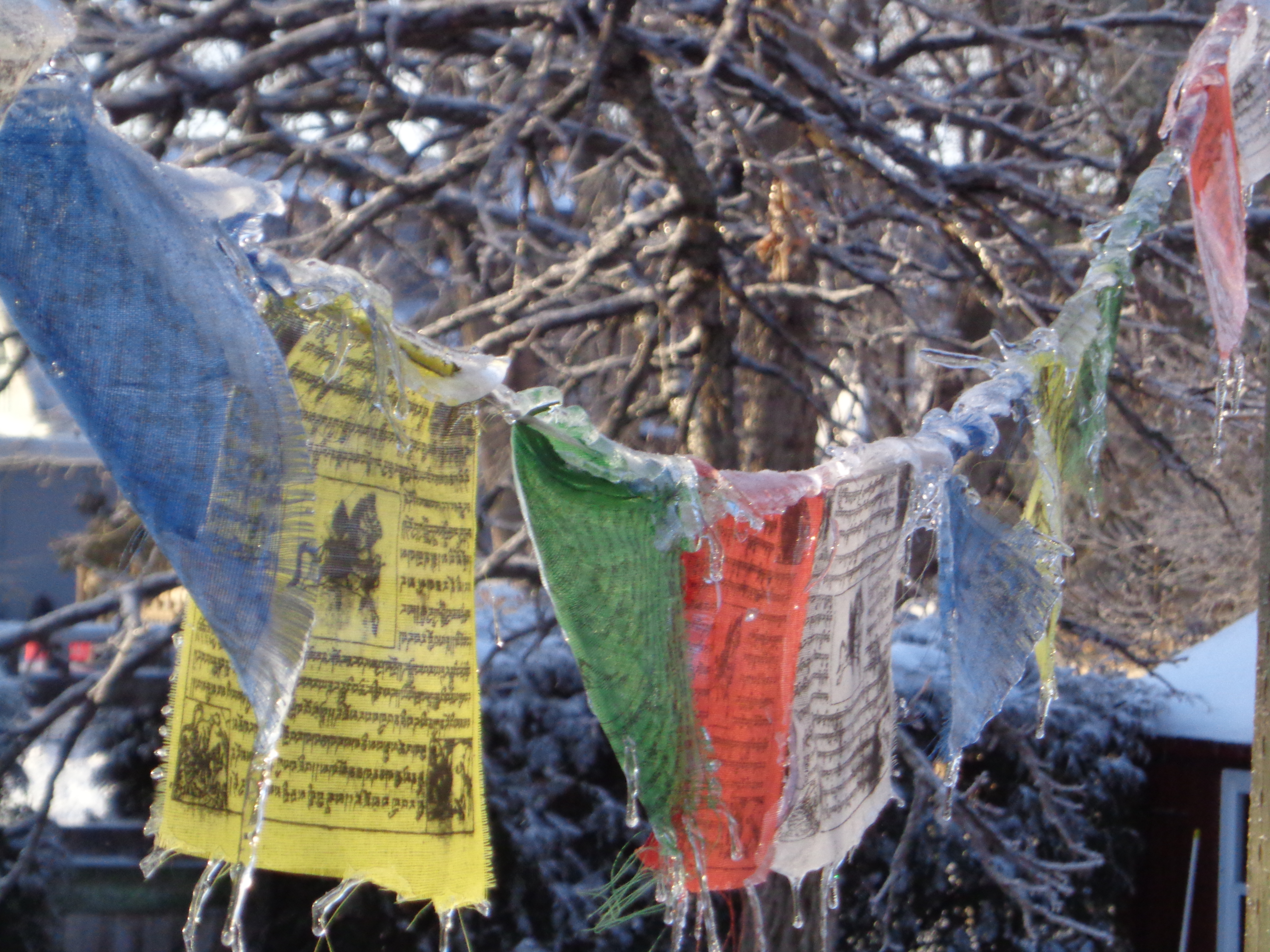
Nepali prayer flags
110 cm of snow in 7 days.
We are beleaguered,
buried now.
Shovelling is futile.
Through the top third of the window
we see grey sky,
horizontal snow,
blue lightening.
We put wood in the stove
and talk about God.
 |
Very excited to be off to Toronto for the 3rd Words and Kurds event in a year (Vancouver last May & Ottawa in November.)
The following day, Sunday March 1 at 6 pm, I’ll be part of the celebration at Underground Restaurant, York University.
Tara Saberpor posted in facebook:
The Kurdish Students’ Association will be hosting a social event to celebrate the liberation of Kobane. We believe it’s important to promote our culture and bring awareness to struggles of Kurds faced in all parts of Kurdistan. The Rojava revolution is the symbol of resistance and hope for the future of all Kurds. It is the voice to oppression and repression Kurds have been facing for many years!!
Let us all come together to celebrate and acknowledge the struggles of Kurds in Rojava! Let us all stand in solidarity with all brave man and woman fighting for freedom and dignity of Kurds!
Guest Speakers:
Laurie Fraser
Ava Homa
Dance Performances:
Dilan Dance Company
Musical Performances:
Ali Haydar
Kenan
Adnan Godarzi
Tickets $10 (includes dinner)
Please contact us for tickets as soon as possible.
kurdishstudents.yorku@gmail.com
Don’t forget to wear your Kurdish clothes!